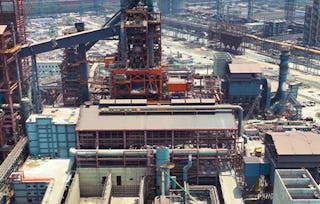
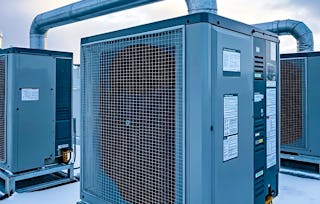
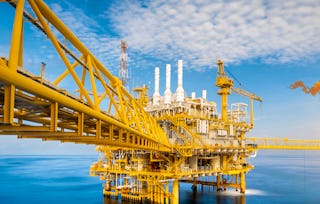
This course is designed for Mechanical and Chemical Engineering professionals, faculty members, and students who are involved in the design, operation, and management of Chemical and Process Industry (CPI) facilities. It provides a comprehensive understanding of utility systems that are critical for safe, reliable, and efficient plant operations.

Gain next-level skills with Coursera Plus for $199 (regularly $399). Save now.

Design of General Utility Systems
This course is part of Design of Utility Systems for Industrial Plants Specialization

Instructor: Subject Matter Expert
Included with
Recommended experience
Skills you'll gain
Details to know

Add to your LinkedIn profile
January 2026
5 assignments
See how employees at top companies are mastering in-demand skills

Build your subject-matter expertise
- Learn new concepts from industry experts
- Gain a foundational understanding of a subject or tool
- Develop job-relevant skills with hands-on projects
- Earn a shareable career certificate

There are 5 modules in this course
In the context of process plants, Utility Systems refer to the essential services and infrastructure required to support production and operations. These systems are designed to provide the necessary resources (e.g., water, steam, air, nitrogen, electricity etc.) and ensure the safe and efficient operation of the plant. These systems are responsible for supplying, controlling, and distributing various forms of energy, water, chemicals, and other necessary substances to the plant. The efficient functioning of these utility systems is critical to ensuring smooth operations, energy efficiency, and safety in industrial facilities. Utility systems are vital for maintaining smooth operations, supporting production processes, ensuring safety, and minimizing environmental impact. In this module, different types of Batch and Continuous Process plants are discussed. Utility systems are interconnected and have specific design schemes to ensure proper flow and control. Important utility schematics (e.g., RO-DM plant, Heavy Fuel Oil, Fuel Gas etc.) are covered in this module. Utility systems must adhere to strict codes and standards to ensure safety, reliability, and environmental compliance. Important codes, parameters, process documentation, and reference Engineering documents of L & T are covered in this module. Understanding the various types of utilities, their roles, and the relevant codes and standards is vital for engineers and plant operators to ensure smooth, reliable, and sustainable plant operations.
What's included
7 videos2 readings1 assignment8 plugins
The air system in a process plant is crucial for supplying compressed air to power tools, equipment, instrumentation, and other operational systems. The design of an air system involves ensuring that air is available at the required pressure, flow, and quality. It must be reliable, energy-efficient, and capable of meeting all process requirements while minimizing downtime and maintenance. In this module, introduction and usage as compressed air as utility, difference between plant air and instrument air, industry specification for various types of compressed air are discussed. We also explore the types of air compressors, and how to size them based on specific requirements. In depth understanding of Instrument air supply used for controlling pneumatic instruments, valves, and other process equipment in industrial facilities such as oil refineries, chemical plants, and power plants are discussed. Types of dryers that are used to remove moisture from compressed air are covered. Aspects on the Material of Construction (MOC) is crucial for air system which matters the durability, corrosion resistance and must adhere strict Industry standards are covered. Also, procurement strategy and Engineering Documents required as inputs for design using reference L&T project documents are covered in detailed.
What's included
6 videos1 assignment7 plugins
A Nitrogen System is used in various process industries (oil & gas, petrochemical, pharmaceutical, food, etc.) for purging, blanketing, inert agent, and packaging applications. The system can be designed to generate nitrogen on-site or use nitrogen from cylinders or bulk storage tanks. A nitrogen system is designed based on purity, flow rate, pressure, and application requirements. In this module application of nitrogen, codes & standards for nitrogen systems such as ASME B31.3, NFPA 55, etc., storage & transportation standards for pressure vessel design for Nitrogen tanks (e.g., ASME Section VIII, EN 13458, etc.,) liquid nitrogen transportation regulations, cryogenic storage tank for liquid nitrogen and safety practices for liquid nitrogen handling are discussed. The types of nitrogen onsite production methods such as Pressure Swing Adsorption (PSA), cryogenic, and membrane plant are covered. Catering to nitrogen in process plants, and the difference between storage and on-site generation, redundancy, and backup for uninterrupted nitrogen availability are discussed in detail. Also, the overall & cost comparison of three nitrogen-generating technologies, nitrogen process control, Material of Construction (MOC) & procurement strategy, as well as engineering documents required as input for the design using L&T project documents are covered in this module.
What's included
3 videos1 assignment10 plugins
Water is a critical utility in Chemical Process Industries (CPI), serving various functions such as process operations, cooling, steam generation, firefighting, and potable use. Efficient water management ensures process efficiency, safety, and compliance with environmental regulations. In this module, we will delve into the various sources of water in CPI, and the types of water systems used in CPI for example raw water, potable, cooling, and fire water systems. The module also covers the water composition and its interpretation based on physical, chemical, and biological parameters. This module covers raw water and its sources such as groundwater, municipality supply or desalinated seawater, their equipment involved such as pumps and intake screens, settling tanks, chemical dosing systems, etc., MOC (Material of Construction) for Raw Water System for its piping, tanks and filters, chemicals used in their treatment such as coagulant, disinfectant, and pH. Potable water systems have their quality as per WHO guidelines, EPA & BIS standards, their uses in CPI such as drinking, sanitation, and emergency eye wash stations, the Material of Construction (MOC) in piping, storage tanks, and various chemicals used in the treatment. Fire water systems and quality standards such as 1S 15105, their equipment involved such as fire pumps, fire hydrants, sprinkler systems, storage tanks, and MOC for piping, pumps, and valves. Cooling water quality interpretation, types of equipment used such as cooling towers, and heat exchangers, etc. their MOC for types of equipment, and chemicals for inhibiting scaling, corrosion, etc. are covered comprehensively in this module.
What's included
7 videos1 assignment7 plugins
Water is an essential utility in CPI, requiring proper treatment, storage, and distribution. Different types of water systems have specific quality requirements and equipment to maintain efficiency and safety. Proper MOC selection and chemical treatment ensure reliable performance and longevity of water systems in industrial applications. In this second part design of water systems, sea water interpretation, key parameters and its quality, equipment used in sea water systems, various desalination methods of sea water, their material of construction and treatment chemicals used are covered. Secondly, boiler feed water systems their uses in CPI, their interpretation of boiler feed water quality, types of equipment’s used in treatment of boiler feed water system, material of construction and handling chemicals used are discussed. Finally, soft water and demineralized water system their quality, standards, and uses in CPI, soft water production methods and techniques such as ion exchange, reverse osmosis, demineralization, and the material of construction and treatment chemicals are covered in detailed.
What's included
5 videos1 assignment7 plugins
Earn a career certificate
Add this credential to your LinkedIn profile, resume, or CV. Share it on social media and in your performance review.
Instructor

Offered by
Explore more from Mechanical Engineering

L&T EduTech

L&T EduTech
Status: Free Trial
Why people choose Coursera for their career


Open new doors with Coursera Plus
Unlimited access to 10,000+ world-class courses, hands-on projects, and job-ready certificate programs - all included in your subscription
Advance your career with an online degree
Earn a degree from world-class universities - 100% online
Join over 3,400 global companies that choose Coursera for Business
Upskill your employees to excel in the digital economy
Frequently asked questions
To access the course materials, assignments and to earn a Certificate, you will need to purchase the Certificate experience when you enroll in a course. You can try a Free Trial instead, or apply for Financial Aid. The course may offer 'Full Course, No Certificate' instead. This option lets you see all course materials, submit required assessments, and get a final grade. This also means that you will not be able to purchase a Certificate experience.
When you enroll in the course, you get access to all of the courses in the Specialization, and you earn a certificate when you complete the work. Your electronic Certificate will be added to your Accomplishments page - from there, you can print your Certificate or add it to your LinkedIn profile.
Yes. In select learning programs, you can apply for financial aid or a scholarship if you can’t afford the enrollment fee. If fin aid or scholarship is available for your learning program selection, you’ll find a link to apply on the description page.
More questions
Financial aid available,