Human Physiology Courses
Human physiology courses can help you learn about the human body's systems, including the muscular, circulatory, and nervous systems, as well as how these systems interact. You can build skills in analyzing physiological data, understanding homeostasis, and applying concepts to health and wellness scenarios. Many courses introduce tools like physiological measurement devices and software for data analysis, that support conducting experiments and interpreting results in both clinical and research settings.
Popular Human Physiology Courses and Certifications
 Status: Free Trial
Skills you'll gain: Medical Terminology, Pulmonology, Pathology, Endocrinology, Cardiology, Medical Records, Respiratory Therapy, Neurology, Obstetrics And Gynecology, General Medical Tests and Procedures, Diagnostic Tests, Urology, Gynecology, Anatomy, Human Musculoskeletal System, Health Information Management and Medical Records, Cell Biology, Orthopedics, Physiology, Immunology
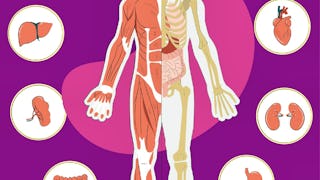 Status: Preview
The Chinese University of Hong Kong
Skills you'll gain: Human Musculoskeletal System, Sports Medicine, Pulmonology, Respiration, Endocrinology, Cardiology, Anatomy, Physiology, Kinesiology, Orthopedics, Neurology
 Status: NewStatus: Preview
AI CERTs
Skills you'll gain: HR Tech, Responsible AI, Human Resources, People Analytics, Data Ethics, Applicant Tracking Systems, AI Enablement, Employee Performance Management, Recruitment, Talent Recruitment, Workforce Development, Artificial Intelligence, Employee Engagement, Diversity and Inclusion, Generative AI, Generative AI Agents
 Status: Free Trial
Arizona State University
Skills you'll gain: Usability, Usability Testing, Problem Solving, Human Factors, User Experience Design, Human Centered Design, Critical Thinking and Problem Solving, Human Factors Engineering, Creativity, User Research, Decision Making, Human Computer Interaction, Human Learning, User Interface (UI), Data Collection, Human Machine Interfaces, Research Design, Computer Displays, Accident Prevention, Control Systems
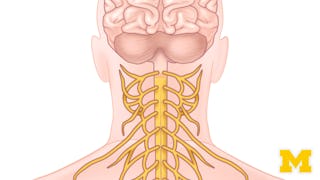 Status: Free Trial
University of Michigan
Skills you'll gain: Anatomy, Neurology, Physiology, Medical Terminology
 Status: Free Trial
Skills you'll gain: Cell Biology, Physiology, Anatomy, Human Musculoskeletal System, Medical Terminology, Biology, Respiration, Life Sciences, Vital Signs, Health Assessment, Basic Patient Care
 Status: Preview
New York University
Skills you'll gain: Respiratory Care, Mindfulness, Physiology, Stress Management, Research, Cardiology, Orthopedics, Immunology, Anatomy, Chronic Diseases, Neurology, Endocrinology, Mental Health
 Status: Free Trial
Skills you'll gain: Medical Terminology, Pathology, Medical Records, Anatomy, Health Information Management and Medical Records, Cell Biology, Physiology, Vital Signs, Biology, Human Musculoskeletal System, Nutrition and Diet
 Status: Preview
Duke University
Skills you'll gain: Neurology, Physiology, Anatomy, Cell Biology, Psychology, Pathology, Molecular Biology
 Status: Free Trial
Skills you'll gain: Cardiology, Hemodynamics, Cardiac Dysrhythmia, Diagnostic Tests, Respiration, Anatomy, Hematology, Physiology, Vital Signs, Medical Terminology
 Status: Free Trial
Johns Hopkins University
Skills you'll gain: Organizational Change, Change Management, Performance Review, Human Resource Policies, Recruitment, Smart Goals, Employee Performance Management, Employee Engagement, Diversity and Inclusion, Interviewing Skills, Human Resources, Human Resource Management, Organizational Structure, Employee Onboarding, Health Care Administration, Internal Communications, Labor Law
 Status: NewStatus: Free Trial
Skills you'll gain: Electocardiography, Hemodynamics, Cardiac Dysrhythmia, Cardiology, Patient Observation, Basic Nursing Skills, Clinical Practices, Patient Evaluation, Medical Emergency, Clinical Experience, Anatomy, Blood Pressure, Physiology, Vital Signs, Clinical Nursing
In summary, here are 10 of our most popular human physiology courses
- Human Anatomy and Medical Terminology Fundamentals: MedCerts
- Fundamental Human Physiology in Sports Medicine: The Chinese University of Hong Kong
- AI for Human Resources: AI CERTs
- Human Factors & Usability Engineering: Designing for Humans: Arizona State University
- Anatomy: Human Neuroanatomy: University of Michigan
- Foundations of Human Anatomy and Physiology: Immersify
- Engineering Health: Introduction to Yoga and Physiology: New York University
- Medical Terminology, Anatomy, and Physiology Fundamentals: MedCerts
- Medical Neuroscience: Duke University
- The Heart of the Matter: Exploring the Cardiovascular System: Immersify










