Statistics Courses
Statistics courses can help you learn data analysis, probability theory, hypothesis testing, and regression techniques. You can build skills in interpreting data sets, making informed predictions, and conducting surveys. Many courses introduce tools like R, Python, and Excel, that support performing statistical analyses and visualizing results. You'll also explore key topics such as descriptive statistics, inferential statistics, and experimental design, equipping you with the knowledge to tackle real-world data challenges.
Popular Statistics Courses and Certifications

Illinois Institute of Technology
Skills you'll gain: Database Design, Statistical Analysis, Time Series Analysis and Forecasting, Relational Databases, Database Systems, Data Analysis, Database Management, NoSQL, Database Theory, Databases, Database Development, SQL, Big Data, Model Evaluation, Apache Hadoop, Recurrent Neural Networks (RNNs), Database Management Systems, Bayesian Statistics, Statistical Inference, Technical Communication
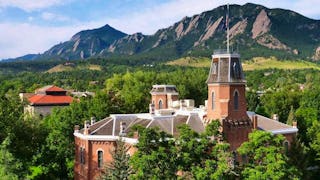
University of Colorado Boulder
Skills you'll gain: Model Evaluation, Data Mining, Unsupervised Learning, Supervised Learning, Service Level, Dimensionality Reduction, Deep Learning, Statistical Modeling, Applied Machine Learning, Anomaly Detection, Machine Learning Algorithms, Probability, Statistical Inference, Statistical Hypothesis Testing, Data Warehousing, Recurrent Neural Networks (RNNs), Regression Analysis, Performance Testing, Bash (Scripting Language), Data Science

Illinois Institute of Technology
Skills you'll gain: Process Improvement, Pay Per Click Advertising, Digital Marketing, Responsible AI, Global Marketing, Web Analytics, Culture Transformation, Financial Statement Analysis, Tableau Software, Digital Transformation, Market Dynamics, Capital Budgeting, Design Thinking, Descriptive Statistics, Predictive Analytics, Leadership and Management, Game Theory, Product Lifecycle Management, Microsoft Excel, Business Strategy
In summary, here are 3 of our most popular statistics courses
- Master of Data Science: Illinois Institute of Technology
- Data Science Graduate Certificate: University of Colorado Boulder
- Master of Business Administration (MBA): Illinois Institute of Technology










